Awake, for morning in the bowl of night has flung the stone that puts the stars to flight.
And, lo, the hunter of the east has caught the sultan’s turret in a noose of light!

Spanish life is not always likeable but it is compellingly loveable – Christopher Howse: ‘A Pilgrim in Spain’
Cosas de España/Galiza
The intelligence reports around the Ceuta migrants invasion have been released.
I don’t know if the wide-ranging oposiciones (civil service exams) are unique to Spain but they are a significant element of the culture and the economy here. And – in a country where many people have long sought to be a civil servant (f uncionario) – they cost a lot of job aspirants a great deal of time, energy and money. This is a brief statement of what they are but there’s more detail at the end of this post, for those interested in knowing more: The Spanish oposiciones-training sector is a large, durable and commercially important education niche, probably in the high hundreds of millions of euros annually, and potentially above €1 billion if all related preparation spending is included. The market is not dominated by one corporation but is dispersed among academies, online platforms, publishers and independent tutors, with digital delivery increasingly taking share from traditional classrooms.
Lenox Napier writes here, as amusingly as ever, on the AI threat to humanity. [By the way, heat records were also broken this year up here in ‘cooler’ Galicia].
That cheap housing portal from the government . . .Galicia’s Xunta complains that it doesn’t address the situation in the regions areas of greatest ‘tension’.
Good news for some: Spain’s Directorate-General for Traffic (Dirección General de Tráfico, or DGT) is preparing to scrap the requirement that you need to take a driving rest again in you qualified in an automatic and want to move to a manual car. The replacement will be a straightforward 7-hour certified training course – handled directly through licensed driving schools rather than official DGT examiners.
I hosted 16 folk to lunch today. I mention this only to cite the fact that 2 Spanish couples – despite gentle prompts – never replied to the invitation and, of course, didn’t turn up. This informalidad is a feature of Spanish life and is possibly the other side of the coin of ‘spontaneity’. It’s something I’m inured to after many years and many lunches/dinners here. I should add that other Spanish couples and individuals did reply. If you’re new to Spain, bear this in mind and don’t be offended. It is what it is, as the Spanish say.
P. S. Later . . . . One of the Spanish couples who’d said they were coming didn’t turn up. I rest my case . . .
Portugal
Cork has been very important to Portugal – shops there sell a wide variety of things made from the stuff – bit diversification has become essential to industry survival. A relevant article on this here.
Europe
Populism is putting Europe’s future at risk. Taster . . . National populism is, in a certain sense, even more dangerous than fascism because it presents itself as democratic.
The Middle East War
The latest update from Naked Capitalism.
The United States of Trump America
The lunatic attacks on Canada, that even MAGA folk don’t understand or support.
Trump tailspins as his latest plan to rig the midterms is mocked, even on Fox
Relevant Books
- To be published in October. Can be pre-ordered now: Wtf America?!: The Way Out of This Hell and Back to Democracy. On Amazon or here.
- The final pages of Kurt Andersen’s fascinating run through the USA’s history – Fantasyland: How America went haywire. A 500 year history.
AI
During the peer review process for a scientific paper on “The efficacy of zinc–based nanogel for wound heating” the text was found to contain a surprising reference to “1ml of the mass killing of an ethnic group” – an unfortunate AI translation of the common chemistry term “final solution“. No wonder folk are worried about AI taking over the world.
Spanish
- Encaprichado: Infatuated
- Alcaparras: Capers
- Sablazo: Sword slash. Rip off
You Have to Laugh
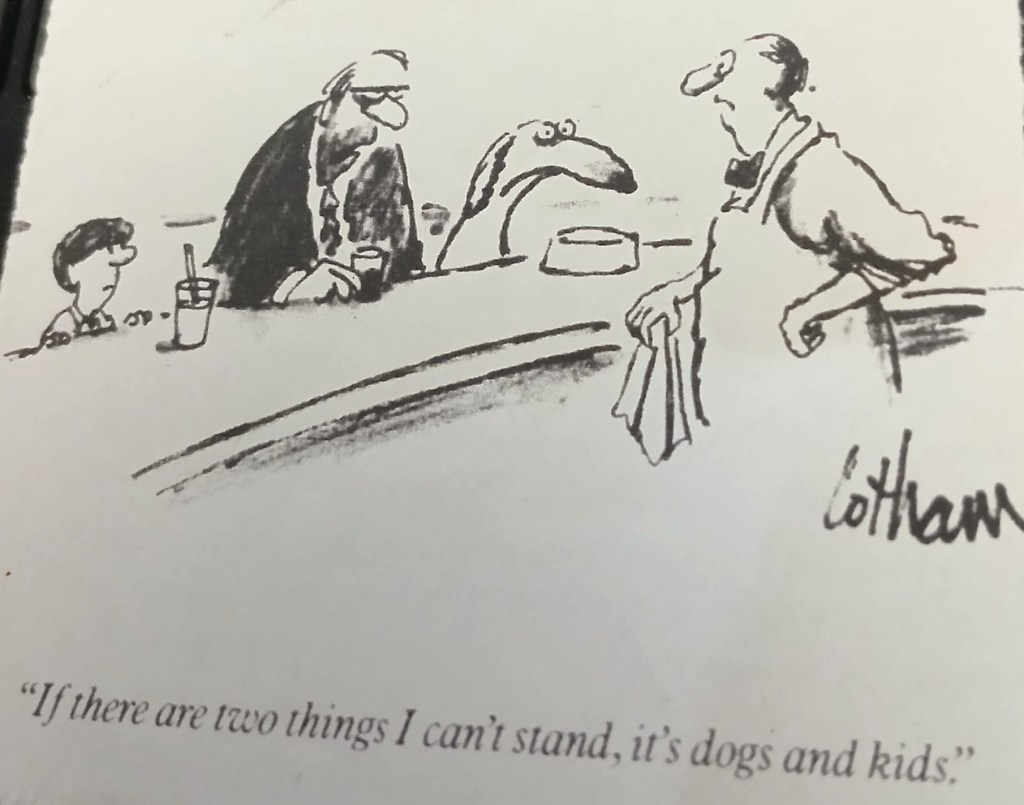
Finally . . .
My apologies for the several errors in yesterday’s post, born of haste as I was rushing to get out to meet a lady. Well, a woman, anyway. Who doesn’t read my blog. Fortunately.
My thanks to those readers who take the trouble to Like my posts.
Spain’s oposiciones-preparation industry
This is a large and fragmented market of traditional academies, online platforms, specialist preparadores, publishers and test-app companies.
Scale of demand
The potential customer base is unusually large:
A 2025 survey reported that 20% of Spanish adults were currently preparing an opposition, while another 27% were considering doing so. These figures should be treated cautiously because they come from a sector-linked survey, but they indicate the scale of interest.
Online preparation is already mainstream: 41% of current candidates in that survey chose online courses, compared with 24% preferring a conventional face-to-face academy.
Candidates often prepare for years and may sit several calls before succeeding, creating recurring revenue for academies.
Demand rises and falls with the number of public-sector vacancies, but employment stability remains a powerful attraction.
The broad range reflects uncertainty over who counts as an “active” candidate and whether to include books, fees, physical-test coaching and private tutors.
A more conservative estimate is probably more credible: around €500 million to €1.5 billion per year for direct preparation services and materials. This includes tuition, online subscriptions, mock exams, temarios, tutor support and specialist preparation—not the salaries o*r costs of the public examinations themselves.
One useful benchmark is OpositaTest, a major online platform. It reported around 70,000 users and €5.3 million revenue in 2024, with a target of €6.5 million for 2025. That is only one company, but it illustrates the size of the leading digital businesses.
What candidates pay
Typical prices vary considerably:
Online recorded courses: approximately €60–€140 per month.
Live online classes: roughly €80–€180 per month.
Physical academies: about €100–€220 per month.
Higher-level A1 preparation: often €200–€300 per month.
A complete 12–24-month preparation may cost roughly €1,000–€4,500, including teaching and materials.
A separate sector estimate puts average spending at about €78 per month, with costs rising from around €59 for C2-level examinations to about €129 for A1-level examinations.
Thus, an academy with 1,000 active students paying an average of €100 per month would have gross recurring revenue of approximately €1.2 million a year, before books, enrolment fees, cancellations and other income.
Major segments
The industry is divided into several fairly distinct businesses:
Large national academies: Preparing candidates for administrative, justice, police, Guardia Civil, education and health examinations.
Local classroom academies: Particularly important for Policía Nacional, Guardia Civil, teachers, regional administration and healthcare.
Online academies and apps: These offer recorded lessons, live classes, question banks, personalised study plans and progress tracking. They can scale nationally with much lower physical costs.
Individual preparadores
Specialists who coach small groups, especially for competitive A1 examinations such as judicatura, fiscalía, notarías, inspectors and senior technical posts.
Publishers and test providers: Temarios, legal updates, printed manuals, mock examinations and subscription question banks remain important revenue sources.
Physical and specialist preparation: Police, military and firefighting candidates may also pay for fitness training, psychotechnical tests, interviews and medical-preparation services.
Why it is commercially attractive
The sector has several characteristics that make it attractive:
Students pay monthly, producing recurring income.
Candidates may remain customers through several examination cycles.
Digital materials have low marginal distribution costs.
A successful academy can build a strong reputation around pass rates.
Large public-employment announcements create sudden surges in enrolment.
The market is geographically broad: an online academy can sell to candidates throughout Spain.
But it is not risk-free. Revenue depends heavily on government recruitment schedules, examination delays, changes to syllabuses and the academy’s ability to demonstrate credible results. Competition is also intense, and many small providers operate as one-person businesses rather than substantial companies.
The Usual Links .
You can get my posts by email as soon as they’re published. With the added bonus that they’ll contain the typos I’ll discover later. I believe there’s a box for this at the bottom of each post. If you do this but don’t read the posts, I will delete your subscription. So perhaps don’t bother if you have other reasons for subscribing . . .
I can also be read on X at Thoughts from Galicia. And on Substack here. I no longer post on Facebook.
For new readers: If you’ve landed here looking for info on Galicia or Pontevedra, try here. If you’re passing through Pontevedra on the Camino, you’ll find a guide to the city there.
If you´re thinking of moving to Spain, this link should be useful to you. And this, on the annual costs of owning property here.


Oposiciones! I blame the French. My understanding is they invented them.
They were also responsible for changing driving to the right hand side. I think.
The French have a lot to answer for.
My spare rib and I had a lovely meal last night with 3 other couples. One couple was a Czech lass who speaks excellent Spanish, and her partner a returning emigre from Switzerland. Oposiciones were a big topic, as the Swiss Spaniard who left Spain as a boy, now sees how utterly ridiculous they are. We got the Swiss version of how things are done, which was very simar to the UK, but likely better organised.
The conversation moved on to politics, how incredibly inept Sanchez, Feijoo, Abascal and even Ines (mayor of Coruña) are.
Then we got on to banks.
Then the impuesto de sol.
It was all a bit intense for a Saturday night.
Fortunaetly, I was well accompanied by a bottle of Godello, which was always kept within arms length.
LikeLike
The oposiciones might have been inspired by whatever the French did but they were established in mid XIX to put an end to the nepotism and clieintelism surrounding the appointment of civil servants at the time. If suppressed what would one replace them with? Does anyone really think that any good would come out of that? Things that work in other countries dont necessarily produce good results locally. Unfortunately, Spain is still too corrupt to do away with oposiciones. They do, though, remind me mostly of the Chinese mandarinate. Maybe the inspiration came from there. After all, through their lengthy presence in the Phillipines and the intense trade with China, the Spanish were probably well aware of the existence of such system.
LikeLike
Muy bueno el chiste con el dibujo.
Las oposiciones de convierten en un calvario, es normal que la policía y militares pasen pruebas médicas, físicas y psicológicas por el trabajo que van a desempeñar pero en otros casos para mí, es bastante absurdo ya que cuando se tiene una formación, se supone que ya estás preparado para poder trabajar sólo necesitas coger experiencia, algo que se consigue con el tiempo. Para algunas personas, las oposiciones son la mejor forma de seleccionar a los más cualificados. Eso sin tener en cuenta que bastantes se dieron a dedo durante muchos años, otras eran merecidas, pero es que hasta algunos títulos universitarios fueron regalados, por tal motivo, algunos licenciados en derecho, por ejemplo, nunca podrían ejercer como abogados porque no sabrían defender una causa ante un tribunal.
A caso la gente que trabaja en la empresa privada y no pasa por oposición, no está preparada para trabajar ? Y por supuesto que es un gran negocio. Además supone mucho tiempo en El que no se tienen ingresos por lo que hay que pertenecer a una familia que mantenga al opositor como si estuviera haciendo, otra carrera.
No me extraña que se rían de la estupidez que dijo Trump con respecto al premio de 5. 000 $ a todos los adultos si gana el partido republicano…
Has invitado a dieciséis personas a una cena ? Madre mía… Y qué dos parejas no asistieron, deberían avisar con tiempo a no ser que les haya pasado algo grave que no les dé tiempo o estén demasiado preocupados por tal motivo y no piensen en algo que en esa situación no es lo más importe. Dicho esto. No sé cómo se puede ver cómo normal que en España no se cumpla con una cita o compromiso. A mí, salvo excepciones previo aviso, no me ha pasado.
LikeLike