Awake, for morning in the bowl of night has flung the stone that puts
the stars to flight
And, lo, the hunter of the east has caught the sultan’s turret in a noose of light.

Spanish life is not always likeable but it is compellingly loveable – Christopher Howse: ‘A Pilgrim in Spain’.
Cosas de España/Galiza
The government is taking measures to reduce the impact of the rises in oil prices. The PM has reacted to the crisis provoked by the Iran war by unveiling a €5bn, 80-point package of measures to help Spaniards weather the economic uncertainty.
Lenox Napier writes here on the strained relationship between Spain and the USA.
An EU report has it that a lack of of voltage control was a key factor in our electricity blackout of last April.
Valencia has just bid a thunderous, smoke-filled farewell to Fallas 2026. As the echoes of the final mascletà fade and the scent of gunpowder lingers over the Turia, the city is already catching its breath from what has been an extraordinary year for the world’s most famous fire festival. More here, with fotos. Truly astonishing creations
Talking of amazing sights . . . Noémi writes here on the Sagrada Família, now the tallest church in the world.
The UK
I’ve never believed that the USA really believes that it has a special relationship with the UK, though it might at times have suited it to pretend that this exists. As Helmut Schmidt said: The special relationship is so special only one side knows it exists.
The US-Iran War
As Donald Trump keeps the US military engaged in Iran without a clear goal, new crises – like the closing of the Strait of Hormuz – mean further engagement. A former deputy national security advisor and a former special envoy for Iran, talk about how Iran’s asymmetric strategy and the global economy at stake could give Trump much more than he bargained for in Iran.
The Dangerously Delusional, Bellicose/Mad Sociopath in the White House.
Even by his execrable standards, Trump’s behaviour in the past 3 weeks has been abominable. . . The biggest question now is whether Trump can extricate himself and the US before it all gets much, much worse. And – if and when he calls a halt – will Iran or Israel actually listen?
A man who dodged the Vietnam draft has called his NATO allies cowards for not wanting to participate in his mad war. He’s also called for crews of oil tankers to ‘have the guts’ to sail through the Strait of Hormuz. As if he would.

Spanish
When talking with a Spanish friend about how to say ‘I’m fond of you’ in Spanish, I was surprised to be told that Me gustas can be much stronger than ‘I like you’ or ‘I am fond of you’. This sent me down the rabbit hole of the difference between:-
- Me caes bien
- Me gustas (which I’d thought was quite light – ‘I like you’ – but can be much stronger)
- Te tengo cariño
- Te quiero
- Me encantas
- Te amo
This is a minefield for a foreigner. And that’s before you get into the further complication of adding Mucho or Muy to the basic expression. As often is the case in Spanish, the tone and context can be critical.
The results of AI searches are below. Needless to say, I can’t guarantee accuracy. I intend to discuss the subject with Spanish friends and will, doubtless, emerge even more confused/uncertain.
Did you know?
The estimable Mel Brooks has been amusing people for almost a century.
You Have to Laugh
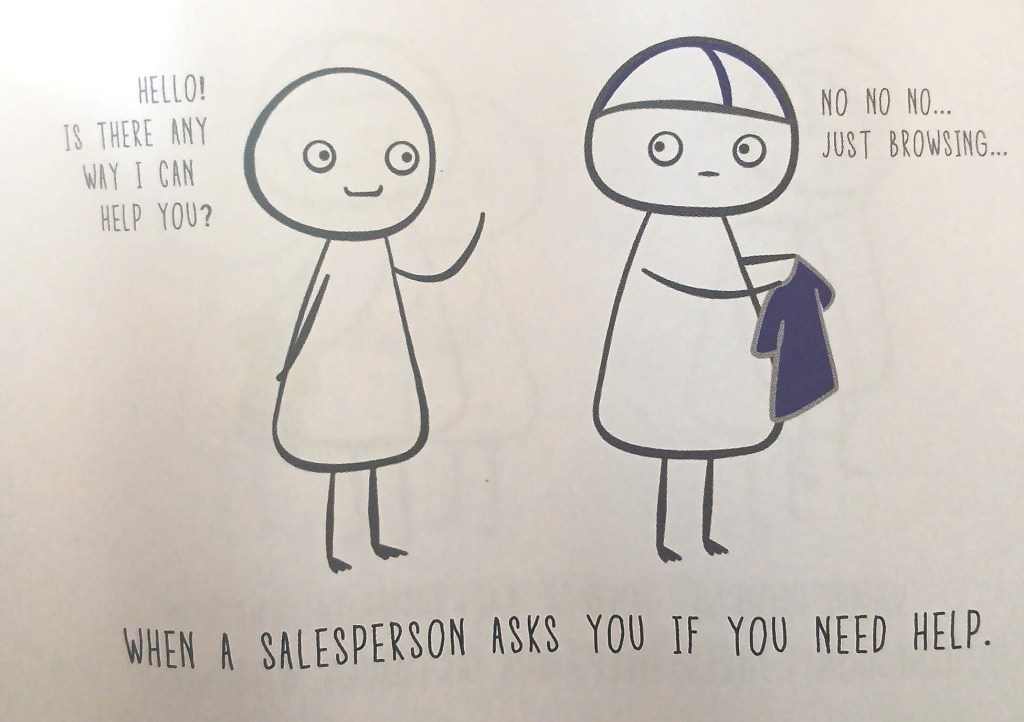
Another uncomfortable Finn . . .
Finally . . .
I lunched with an English friend today. Very pleasant but it would have been even more so if we hadn’t had to strain to converse, thanks to the volume of noise from the next table of 8 young women. Amusingly, my friend put Spanish levels of verbal noise down to excess energy born of inadequate sexual activity. Not sure that this is a shared thesis.
Finally . . . Finally . . .
THE TREACHEROUS WORLD OF SPANISH EXPRESSIONS OF AFFECTION
Me gustas
- “I like you” → Me gustas.(Literally “you please me.” Used when you’re attracted to someone, not just friendly liking.)
- “I like you a lot” → Me gustas mucho.(A stronger version, often flirtatious or romantic.)
- “I love you” → can be two main forms:
- Te quiero — affectionate love (common among couples, friends, and family).
- Te amo — deeper, more intense love (used in serious romantic contexts).
For example: Me gustas mucho, te quiero mucho, pero todavía no te amo. “I like you a lot, I care about you deeply, but I don’t love you yet.”
Te quiero
In Spain, te quiero is the normal, go‑to way to say “I love you” in everyday life, while in much of Latin America te quiero and te amo are felt as two different “levels” of love.
- Te quiero
- Used with romantic partners, close friends, and family.
- Covers a wide range from “I’m fond of you” to “I love you”, and context/tone do the work.
- Te amo
- Sounds very intense, literary, or even a bit cheesy/cursi for many Spaniards.
- Common in songs, poetry, religious language, or when someone wants to be deliberately dramatic; many people say they practically never use it in daily speech.
So in Spain, a serious long‑term partner is more likely to hear te quiero mucho than te amo.
In Latin America (general tendencies)
- Te quiero
- Often seen as a “lighter” affection: appropriate for friends and family, and also for earlier stages of a romantic relationship.
- Te amo
- Generally reserved for deeper or more serious love, especially between romantic partners, and sometimes from parents to children.
- In some countries/regions it is kept quite “serious” and not thrown around casually; in others, younger people may use it more freely, so the emotional weight can feel somewhat diluted.
There is a lot of individual and country‑by‑country variation: for example, some Mexicans say te amo only to a partner, while others might also use it in a very close family context; in Argentina, some speakers report it’s mostly for romantic partners.
Te quiero v Te amo: Practical takeaway for you
- Speaking in Spain:
- With a partner or close family: use te quiero/te quiero mucho as your default.
- Only use te amo if you intentionally want to sound poetic or very dramatic.
- Speaking in (most of) Latin America:
- With friends/family: te quiero is safe and affectionate.
- With a serious romantic partner: te amo usually corresponds closest to English “I love you” in the full, committed sense, while te quiero can feel a bit milder or earlier‑stage.
How to say ‘I am fond’ of in Spanish
In Spanish, the expression depends a little on tone and intimacy, but here are the most natural equivalents:
- “I am fond of you” → Me caes bien (friendly, light) or Te tengo cariño (warmer, more affectionate).
- “I am very fond of you” → Te tengo mucho cariño.
Notes:
- Me caes bien literally means “you fall well with me,” used in casual friendships.
- Te tengo cariño means “I have affection for you,” and can suggest genuine emotional warmth — suitable for friends, relatives, or partners depending on tone.
Here’s how you can adapt “I’m (very) fond of you” naturally in Spanish for each context:
Romantic
- Te tengo mucho cariño. – Warm and affectionate; implies love developing or already present.
- Me encantas. – Literally “I adore you / you delight me”; more openly romantic.
- Estoy muy encariñado(a) contigo. – “I’m very attached to you,” gentle and emotionally sincere.
Friendly
- Te tengo cariño. – “I’m fond of you,” ideal for close friends.
- Me caes muy bien. – “I really like you,” light and friendly, often used when dating hasn’t turned romantic.
Family
- Te quiero mucho. – Most common among Spanish speakers for family; means “I love you” in a familial, not romantic, sense.
- Te tengo mucho cariño. – Soft, affectionate, and suitable for relatives like a nephew or aunt.
My thanks to those readers who take the trouble to Like my posts.
The Usual Links . . .
You can get my posts by email as soon as they’re published. With the added bonus that they’ll contain the typos I’ll discover later. I believe there’s a box for this at the bottom of each post. If you do this but don’t read the posts, I will delete your subscription. So perhaps don’t bother if you have other reasons for subscribing . . .
I can also be read on Facebook.
For new readers: If you’ve landed here looking for info on Galicia or Pontevedra, try here. If you’re passing through Pontevedra on the Camino, you’ll find a guide to the city there.
If you´re thinking of moving to Spain, this link should be useful to you.
 Thoughts from Pontevedra, Galicia, Spain
With regard to your selection of Finnish cartoons, there is a tougher side to their collective character, which is probably genetic in origin.
https://en.wikipedia.org/wiki/Sisu
Ystävällisin terveisin,
Perry
LikeLike