Awake, for morning in the bowl of night has flung the stone that puts
the stars to flight
And, lo, the hunter of the east has caught the sultan’s turret in a noose of light.

Spanish life is not always likeable but it is compellingly loveable – Christopher Howse: ‘A Pilgrim in Spain’.
Cosas de España/Galiza
Mark Stücklin writes on property matters:-
- Why the war could result in a rush of wealthy folk to Spain.
- The damage done by rent controls and inadequate housing policies.
And Lenox Napier writes here on the US Evangelists who believe Trump is god-ordained. And their Iranian counterparts.
The USA
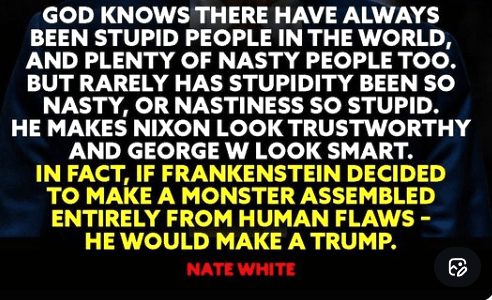
See my earlier post on the dangerously delusional, bellicose president. And the country’s religious nuts.
The USA Iran war
Quote: This is not a US-Iran war, it is a Gulf region war, involving every country in it. Terrifying for all.
If you’re not worried about the longer-term economic effects of Trump’s war on Iran, you’re not thinking about them enough. Iran’s latest stated position is that: Ceasefire is not an option. The war will continue until Iran’s demands are met. These are:-
- 1. The US is no longer able threaten it again. No US bases in the Persian Gulf
- 2. Full compensation is paid to Iran by the USA, Israel and/or the Gulf regimes for the slaughter and destruction inflicted on Iran, which is increasing with continuing US/Israeli attacks on Iran.
If these are not met, says Iran, it will destroy the entire oil infrastructure of the Middle East. Which is almost certainly a plan prepared over the last 20 years. Scroll down this page to see details of the probable impact of Iran’s retaliatory measures. Which might well have featured in the war-gaming exercises and conclusions which the insane Trump chose not to consider.
Right of centre Richard North – a pessimist – about how the war will end – gives us here a useful review of attitudes and predictions in various international media outlets.
And left-of-centre Robert Reich writes tells us here that the war is an overwhelming failure of US democracy, and asks what it to be done now.
Spanish
- Holgado: Loose, baggy. Can also be used to mean ‘comfortable’, eg as with a victory.
- Chulear: To show off. To brag. To bully
- Antifaz: Sleep/eye mask. Blindfold.
English 1
English has a problem with nationals of the USA. We call them Americans but this is wrong, as this term covers nationals of North America and South America. It’s even wrong to call them North Americans, as this includes 24 countries*. Spanish speakers call US folk los estadoudinenses, for which English lacks an equivalent. Perhaps, in times when it’s important to be very precise about which Americans we’re talking about, it’s time to think about Unitedstatesers. Or maybe US-ers. (‘You-ess-ers’). Or something else.
*North American states
- Core Mainland Countries: Canada, United States, Mexico
- Central America: Belize, Costa Rica, El Salvador, Guatemala, Honduras, Nicaragua, Panama
- Caribbean Countries: Antigua and Barbuda, Bahamas, Barbados, Cuba, Dominica, Dominican Republic, Grenada, Haiti, Jamaica, Saint Kitts and Nevis, Saint Lucia, Saint Vincent and the Grenadines, Trinidad and Tobago
English 2:
I knew that British English and American English differed on the past participles of got (got/gotten), to fit (fitted/fit) and spit (spat*/spit) but yesterday I read the sentence: Last year, the Spanish government forbid the transfer of US weapons to Israel and this past participle of forbid was new to me. An (American) AI engine confirms it’s used in the USA but is ‘not usual’. Now. I’m wondering if there are any more differences, other than these from an AI search:-
- To dive: dived/dove
- To plead: pleaded/pled
- To prove: proved/proven [‘Americans’ favor older Germanic -en endings such as gotten and proven while British sticks to got and proved].
*”To Americans, ‘spat’ sometimes sounds overly precise”, whatever that means.
Did you know?
It’s often said that the Phoenicians invented the first alphabet but they didn’t. The earliest alphabetic script emerged among Semitic speakers in Sinai or Canaan 1850-1700 BC. This Proto-Canaanite script simplified Egyptian hieroglyphs into 22-30 signs but for consonants only. Around 1100 BC, the Phoenicians refined this into the first fully mature alphabet, with the signs reduced to 22 efficient phonetic symbols, again for consonants only. Around 800 BC, the Greeks adopted Phoenician letters and added vowels, creating the first true alphabet. Note: Some modern languages still lack at least short vowels, including (Semitic) Arabic, Yiddish, Hebrew and (non Semitic) Persian.
You Have to Laugh
More Finnish discomfort . . .
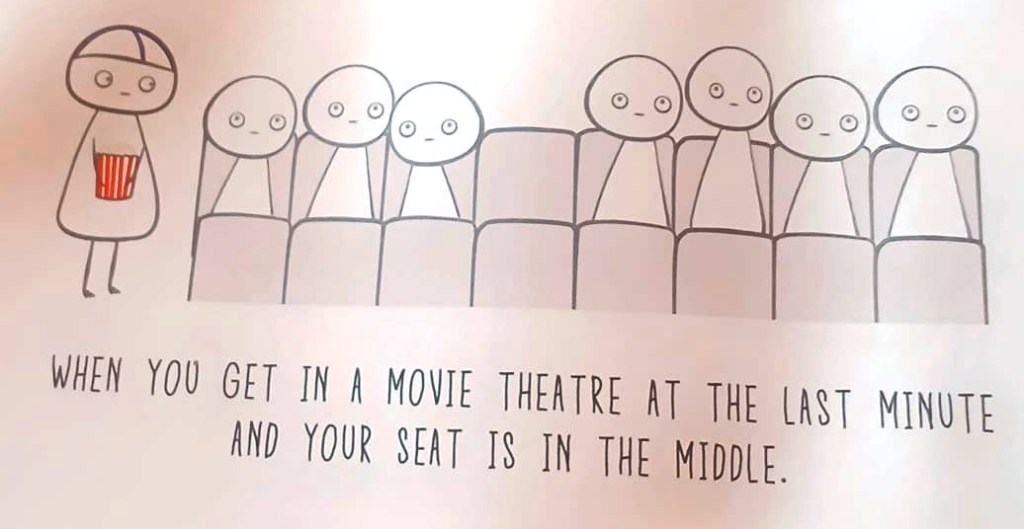
Finally . . .
One of the differences between British culture and others – even other Anglo cultures – is that, in the British culture, it’s ‘not done’ to refer to someone present as ‘he’ or ‘she’. Especially one’s spouse. If this was ever done in my mother’s presence, she would immediately retort: Who’s ‘she’? The cat’s mother? The correct way to refer to someone present is by his/her forename. In the 19th century, it was possibly by surname. This is so driven into one as a British child that I still internally squirm if the rule is broken, even if I know it’s not part of the speaker’s culture.
Finally . . . Finally
My thanks to those readers who take the trouble to Like my posts.
The Usual Links . . .
You can get my posts by email as soon as they’re published. With the added bonus that they’ll contain the typos I’ll discover later. I believe there’s a box for this at the bottom of each post. If you do this but don’t read the posts, I will delete your subscription. So perhaps don’t bother if you have other reasons for subscribing . . .
I can also be read on Facebook.
For new readers: If you’ve landed here looking for info on Galicia or Pontevedra, try here. If you’re passing through Pontevedra on the Camino, you’ll find a guide to the city there.
If you´re thinking of moving to Spain, this link should be useful to you.
 Thoughts from Pontevedra, Galicia, Spain
One option in English for estadounidense is Yankee. This appears to be widely used.
LikeLike
True. Yanqui in Spanish. But usually pejorative and we really needs something neutral.
LikeLike
I read somewhere a while ago that geographical North America ends at the Yucatan Istmus. Anything east ie south of that is Central America – or South America. Which is why Mexicans – pedantically – like to remind everybody that Mexico is geographically part of North America (as if that would change anyone’s perception about where Mexico culturally belongs). One silver lining from the present crisis is that governments in countries not blessed with fossil fuel resources will have more the reason to double down on net zero, which is certainly not a fit of madness but the only rational strategic option for these countries.
LikeLike