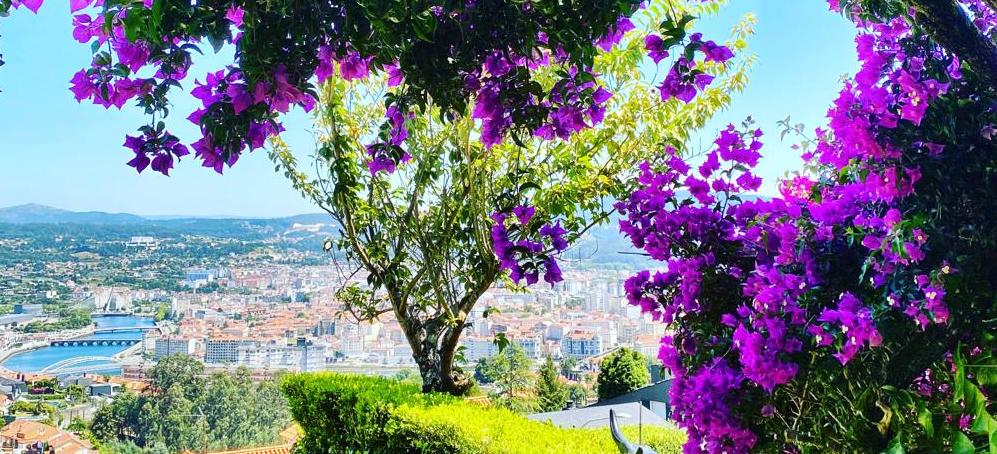
Awake, for morning in the bowl of night has flung the stone that puts the stars to flight.
And, lo, has caught the sultan’s turret in a noose of light!
Spanish life is not always likeable but it is compellingly loveable: Christopher Howse: ‘A Pilgrim in Spain’
Cosas de España
Yesterday – thanks to a podcast by 2 British historians – I was taken down a rabbit hole about the Spanish conquistador, Hernán Cortés, and a woman whom they described as one of the most important people in history but whom I’d never heard of. Though I guess many/most Spaniards will have done so. This was a Nahua woman whose Spanish moniker was La Malinche. She started off as a (sex?) gift to Cortés, became his invaluable translator and eventually his eminence grise. Without her, Cortés could not have achieved – if that’s the right word – what he did against the Aztecs and the history of Spain and, indeed, the entire world would have been very different. See Wiki on her here.
And, this morning, I taken down not one but two rabbit-holes. . . .
This one was inspired by an article I read about the proposal to restore an old railway line:-
- There used to be a direct train line between Sevilla and Oviedo in Asturias, called – like the Camino of (mostly) the same trajectory – La Ruta de la Plata. It closed back in the 1980s but there’s a proposal to re-open it – significantly reducing the travel time between the 2 cities of 7-8 hours, via Madrid. The belief that both the Ruta de la Plata and the Camino de la Plata are named after the Spanish for silver – plata – is almost universal. And Bing endorses this perception thus: The name refers to an ancient Roman road that linked the mining areas of the north with the south of Spain – but, in separate answers, Bing contradicts itself, with: 1. The name doesn’t mean that the route was used for silver trade. It comes from either the Latin word “Lapidata” or the Arabic word “Balatta”, both meaning “paved road”. And 2. The name comes from either the Latin ‘lata’ or ‘late’. ‘Lata’ as an adjective that means broad, wide, spacious, extensive, while ‘late’ is an adverb that means widely, broadly, extensively large, broad.
So, take your pick.
And here’s the second one, ‘inspired’ by this Vogue article on Galicia, which some folk will enjoy and others won’t . . . It refers to a couple of legends/myths, which I was compelled to research, especially as I hadn’t heard the first one:-
- 1. The legend of the buried head of Hercules’s slain enemy in the lighthouse of La Coruña is a myth that mixes Celtic and Greco-Roman elements. According to the legend, the hero Hercules fought a fierce battle with the giant tyrant Geryon, who had three heads and three bodies. [Hercules’ 10th labour]After three days and three nights of continuous combat, Hercules finally killed Geryon and cut off his heads. He then buried one of the heads with his weapons under the lighthouse he built to honour his victory. He also ordered that a city be built on the site, which became A/La Coruña. The lighthouse, known as the Tower of Hercules, stands atop a skull and crossbones representing the buried head of Geryon.
- 2. The legend is also related to another myth that involves the Celtic king Breogán, who was the founding father of the Galician nation. Breogán constructed a massive tower of such a grand height that his sons could see a distant green shore from its top. The glimpse of that land lured them to sail N to Ireland, where they became the ancestors of the Irish people.
The writer says she was told that the Hercules myth inspired the region’s flag. More prosaically, Bing says: The flag of Galicia is a white flag with a blue diagonal stripe that goes from the top left corner to the bottom right corner. It is based on the historical maritime flag of the city and province of La Coruña, which was a blue St Andrews crossover a white field. The flag was adopted – as a symbol of Galician identity – by emigrants who sailed from La Caruña to the Americas in the 19th century.
Oh, and btw, the foto is not of the San Juan de Caaveiro Monastery, but of the wonderful Monastery of Santo Estevo de Ribas de Sil. Now a Parador.
You can’t believe everything you read . . . .
Portugal
They have a lot of high-level corruption, too. And it’s led to the resignation of the Prime Minister.
The USA
Trump really might make it back to the White House, says this columnist. As if the the world doesn’t have enought to worry about already.
The Way of the World
Once upon a time rubberneckers were the scourge of society. Now, thanks to the advent of smartphones, “rubber-snappers” have knocked them off their top spot. . . . I’ve seen these at places beauty, where instead of drinking in the joy those things give us, we now immediately think of how we can use them to make ourselves seem more important later. Which took me back to my last visits to the Grand Mosque in Cordoba and the Alhambra in Granada, where these folk really did irritate me. As I recorded at the time.
Did you know? . . . .
‘Poodle-faker’: Obsolete British slang for: A young man or newly commissioned officer who makes a point of socialising with women; A ladies’ man.
Finally . . .
It wasn’t raining this morning at 7.30 and there was no water dripping from the balcony. But the ground was certainly wet from overnight rain. I was wondering last night if, even taking into account the experience of 3 or 4 rainy seasons in Jakarta, this isn’t the most depressing period of constant rainfall I’ve ever experienced. But the sun is sort of gleaming among the clouds right now. So, everything’s alright in the world. Or at least in this tiny patch of it.
The usual links . . .
For new readers:– If you’ve landed here looking for info on Galicia or Pontevedra, try here. If you’re passing through Pontevedra on the Camino, you’ll find a guide to the city there – updated a bit in early July 2023.
For those thinking of moving to Spain:- This is an extremely comprehensive and accurate guide to the challenge, written by a Brit who lives in both the North and the South and who’s very involved in helping Camino walkers.
 Thoughts from Pontevedra, Galicia, Spain