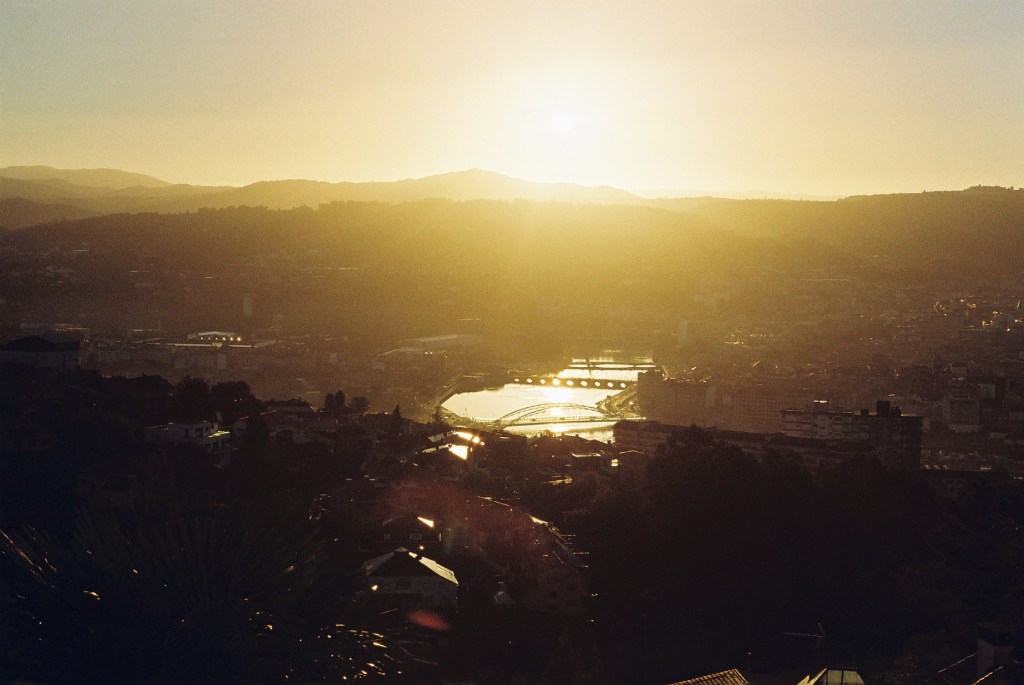
Awake, for morning in the bowl of night has flung the stone that puts the stars to flight.
And, lo, has caught the sultan’s turret in a noose of light!
Spanish life is not always likeable but it is compellingly loveable: Christopher Howse: ‘A Pilgrim in Spain’
Cosas de España
As regards total EU spending, Spain has fallen to the position of 4th largest recipient, at €14,2 billion, compared with €16.2 billion in 2021. Poland is now the biggest beneficiary, followed by France and Italy. France is the biggest beneficiary of the EAGF (European Agricultural Guarantee Fund), followed again by Spain. Given the wealth of France, it’s legitimate to ask why it ranks as number 1 here and number 2 in total. But, then, this is why the EU was set up in the first place, with Germany being gifted the industrial sector. Causing later problems with the Brits, who lost their fishing industry on joining.
I first saw the word Caesarism* only recently I think, in Nigel Townson’s The Penguin History of Modern Spain: At first sight, the 1945 Referendum Law smacked of democratic accountability but, in reality, it reinforced the regime’s Caesarism, as it established a direct link between the ‘Head of State’ and ‘the Nation’, with Franco himself determining ‘the opportunity and convenience’ of a referendum. But now I’ve seen Caesarism here, where the current PM is accused of it. By someone of his own party.
* Wiki: An authoritarian or autocratic political philosophy inspired by Julius Caesar. It has been used in various ways by both proponents and opponents as a pejorative.
I mentioned this sad fact the other day: Spain has a giant missing middle of young people without an education that would allow them to compete in the job market. . . Ironically, while students spend more hours in school than average and the country also boasts slightly higher than average levels of university graduates, it has among the highest rates of young people who barely complete the required secondary education. Details here.
Changing times . . . At the Moroccan restaurant on Sunday, I was surprised to be asked if I wanted bread, as a couple of small pieces are normally given – gratis – with a little bit of hummus. When I said Yes, several pieces arrived in a basket. Which I later saw I’d been charged €1.70 for. Spaniards can’t eat a meal without bread on the side, even if they never eat any of it. Restaurants treat this cultural need in different ways. Often it’s just placed on the table and your’re charged for it – as a sort of cover charge – even if you don’t touch it. But sometimes you’re asked if you want bread and you’ll only be charged if you say Yes. Which I won’t be doing in the future in Dukela. Especially as the price of my favourite dish has soared in the last year. Not being Spanish, I can easily do without a bit of (expensive) bread. (BTW . . .Multiply €1.70 by, say, 6,000 and you get quite a tidy sum of easy extra annual income – €10.200).
Today’s quote from Cees Noteboom’s Roads to Santiago, possibly a tad fanciful:-
- The Spanish character has something monastic about it, even in their great monarchs there is a touch of the anchorite: both Philip and Charles built monasteries for themselves and spent much time in seclusion, turning their backs to the world they were required to govern. Anyone who has travelled widely through Spain is accustomed to such surprising encounters, and indeed anticipates them: in the middle of nowhere an enclave, an oasis, a walled, fortress-like, introverted spot, where silence and the absence of others wreak havoc in the souls of men.
- Ideas which originated in the desolation of the [Middle Eastern] desert found their way to other, more fertile regions, and something of the desert-like austerity has always remained – perhaps nowhere as intensely as in Spain, which has never really been part of Europe.
The UK
Hopes for the mainstream adoption of electric cars have been punctured by figures revealing a fall of more than 11% in the sale of zero-emission vehicles to private buyers. The vast majority of new BEV registrations this year — more than 75% — were with fleets and business owners, which can take advantage of dramatic tax breaks. Or ‘bribes’.
Labour are said to be planning to reduce the voting age at general elections from 18 to 16. The move would enfranchise about 1.5m teenagers. The vast majority of young people have left-wing views. Reducing the voting age is a blatant manoeuvre to gerrymander the result of a general election to bring about a Labour victory. Labour claim that the move is a natural development from the fact that, at 16, many young people are paying taxes, working “and engaging in all parts of society”. This is deeply disingenuous. Both the UN Convention on the Rights of the Child and the Children Act 1989 define someone under the age of 18 as a child.
Russia
Putin says that he invaded Ukraine ‘to prevent genocide’. I wonder if he really believes that. Ukraine has accused Russia of turning the Genocide Convention on its head, making a false claim of genocide as a basis for actions that constitute grave violations of the human rights of millions of people across Ukraine. They can’t both be right.
(A)GW/Energy/Net Zero
For some years, there has been common accord in the West that the battle for net-zero will be fought out in Africa. . . . On the one side, Russia and China offer prosperity and a modicum of stability, while the West offers eco-imperialism, poverty and windmills. Consequently, Africa will increasingly turn to the BRICs or, if not a formal relationship, will drift away from the West’s sphere of interest . , , if Russia and China succeed in the economic (and military) domination of Africa, they will be saving the West from itself. Impoverished and unstable African states generate exactly the “push” factors which drive mass migration, which Western foreign policy has failed to address. But there is a downside. If Russian and China do manage to increase their influence on the continent, it is not beyond either or both to weaponise the “push” factors and drive even more migration to Europe, which already is threatening to collapse the EU, with the UK not far behind.
Did you know? . . .
At the start of the 20th century, Argentina was a very wealthy country indeed. As of now . . Argentina is one of the world’s true basket cases, a country that has defaulted on its debts 9 times since independence from Spain in 1816, and is currently reeling from another acute economic crisis. Annual inflation hit 124% in August – its highest level since 1991. As the country prepares to head to the polls, the Peronist government is under mounting pressure to devalue the peso again to avert economic implosion, having only just done so in August. With 4in 10 Argentines living below the poverty line, shock presidential frontrunner Javier Milei has called for the dollar to replace the peso and for the central bank to be dissolved, describing it as “the worst thing in the universe”.
For new readers:– If you’ve landed here looking for info on Galicia or Pontevedra, try here. If you’re passing through Pontevedra on the Camino, you’ll find a guide to the city there – updated a bit in early July 2023.
For those thinking of moving to Spain:- This is an extremely comprehensive and accurate guide to the challenge, written by a Brit who lives in both the North and the South and who’s very involved in helping Camino walkers. Which is possibly why – I’ve just belatedly realised – his nom-de-plume is Johnnie Walker . . . And I’d thought he was a big whisky fan.
Which, it turns out, he really is . . .

 Thoughts from Pontevedra, Galicia, Spain
It would seem that https://en.wikipedia.org/wiki/Jos%C3%A9_F%C3%A9lix_Uriburu
was the culprit. His coup d’état marked the start of the steady economic & social decline that pushed Argentina back into underdevelopment.
LikeLike